Decoding Secukinumab Injection(Cosentyx)
-
In the field of immune-mediated inflammatory disease (IMID) treatment, the advent of biologic therapies has broken the limitations of traditional approaches and brought renewed hope for recovery to countless patients. As the world’s first fully human monoclonal antibody targeting interleukin-17A (IL-17A) to receive regulatory approval, secukinumab injection(Cosentyx) has demonstrated outstanding clinical efficacy and a unique mechanism of action since its first launch in Japan in 2014. It has become a cornerstone therapy for multiple conditions, including psoriasis and ankylosing spondylitis. In China, secukinumab achieved rapid market access under the country’s accelerated approval pathway, benefiting hundreds of thousands of patients. DengyuePharma provides a comprehensive interpretation of this important biologic from the perspectives of basic drug characteristics, mechanism of action, and clinical applications.
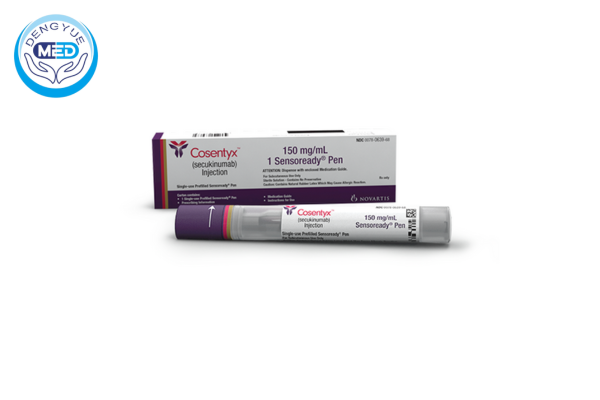
Basic Drug Profile: The Unique Advantages of a Fully Human Monoclonal Antibody
The generic name of secukinumab injection is Secukinumab Injection, with the brand name Cosentyx®. Its international nonproprietary name (INN) is Secukinumab. It is classified as a prescription Western medicine and has been included in China’s National Reimbursement Drug List (Category B), significantly reducing the financial burden on patients[superscript:5].
As a fully human monoclonal antibody, secukinumab belongs to the IgG1/κ isotype and is expressed in the CHO-HPT1 cell line. It exhibits high affinity and enables precise targeting of pathogenic factors. Owing to its fully human structure, the risk of immunogenic reactions is substantially reduced, thereby enhancing overall treatment safety.
In terms of dosage forms and strengths, secukinumab injection is available in three specifications: 0.5 mL: 75 mg, 1 mL: 150 mg, and 2 mL: 300 mg, offering flexible dosing options for patients with different disease severities and body weights. The product is a clear to slightly yellow solution and requires strict storage conditions. It should be stored refrigerated at 2–8 °C and must not be frozen. Prior to use, it may be kept at room temperature (not exceeding 30 °C) for up to four days to ensure preservation of biological activity.
Mechanism of Action: Precisely Blocking the Core Inflammatory Pathway
The core therapeutic advantage of secukinumab injection lies in its highly specific mechanism of action—selective inhibition of interleukin-17A (IL-17A). IL-17A is a key pathogenic cytokine involved in the development of immune-mediated inflammatory diseases. In patients with psoriasis, psoriatic arthritis, and ankylosing spondylitis, excessive production of IL-17A continuously triggers inflammatory responses, leading to skin lesions, joint stiffness, pain, and progressive disease deterioration.
As a fully human monoclonal antibody, secukinumab specifically binds to and neutralizes IL-17A, directly preventing its interaction with cell-surface receptors. This results in suppression of inflammatory processes at their source. A unique feature of secukinumab is its downstream and broad-spectrum mode of action. By targeting IL-17A downstream of other biologic pathways, it inhibits this cytokine regardless of whether it originates from adaptive or innate immune responses. This enables comprehensive neutralization of IL-17A produced by multiple sources, including activated T cells, thereby achieving more effective inflammatory control.
Such precise targeting ensures robust therapeutic efficacy while minimizing interference with normal immune function, avoiding the drawbacks of traditional immunosuppressants that often compromise overall immune defense.
Clinical Applications: Broad Indication Coverage with Well-Validated Efficacy
Since its approval, the indications for secukinumab injection have continued to expand. In China, it has been approved for five major indications, making it a biologic with broad therapeutic coverage for various immune-mediated inflammatory diseases. Key indications and clinical outcomes are summarized below.
1. Moderate to Severe Plaque Psoriasis
This was the first approved indication for secukinumab in China. It is indicated for adult patients who are candidates for systemic therapy or phototherapy, as well as for pediatric patients aged 6 years and older with a body weight ≥50 kg[superscript:5].
Psoriasis is a common chronic inflammatory skin disease characterized by erythema and scaling, which severely affects appearance and quality of life. Many patients also suffer from pruritus, pain, and psychological distress. Studies show that up to 99% of patients with severe psoriasis experience mental stress, and 46% report suicidal ideation.
Multiple clinical trials and real-world studies have confirmed the outstanding efficacy of secukinumab. In a Phase III clinical study conducted in China, more than 80% of patients with moderate to severe psoriasis achieved a PASI 90 response (≥90% lesion clearance) at Week 13. At Week 52, the PASI 90 response rate remained at 82.1%. The proportion of patients achieving PASI 100 (complete skin clearance) increased from 32.9% at Week 12 to 42.1%, demonstrating durable and sustained efficacy.
In addition, the large-scale real-world UNMASK2 study in China—conducted across 42 leading tertiary hospitals and including 1,000 patients—showed excellent complete clearance rates of lesions in difficult-to-treat areas at Week 36: scalp 81.9%, nails 54.9%, and palms/soles 92.5%, effectively addressing major unmet clinical needs.
2. Ankylosing Spondylitis
In April 2020, secukinumab was approved in China for adult patients with ankylosing spondylitis who had an inadequate response to conventional therapy. Ankylosing spondylitis is a chronic inflammatory spondyloarthropathy primarily affecting the spine and sacroiliac joints, often presenting with chronic back pain and stiffness. In severe cases, it can lead to spinal deformity, functional impairment, and disability.
Clinical studies have demonstrated that secukinumab rapidly alleviates pain and stiffness, improves spinal mobility, and helps patients regain normal daily function. A Phase III clinical trial in China confirmed that secukinumab showed a safety profile comparable to placebo in terms of serious infections and candidiasis, while effectively controlling disease activity and reducing relapse rates.
3. Active Psoriatic Arthritis
In January 2024, secukinumab was approved in China for adult patients with active psoriatic arthritis who had an inadequate response or intolerance to conventional disease-modifying antirheumatic drugs (cDMARDs). It may be used as monotherapy or in combination with methotrexate (MTX).
Psoriatic arthritis is characterized by both psoriatic skin lesions and joint inflammation, leading to joint pain, swelling, deformity, and significant impairment of physical function.
The EXCEED study demonstrated that secukinumab provided efficacy comparable to adalimumab in treating peripheral arthritis, while showing superior efficacy in improving psoriatic skin lesions. It effectively improves both joint and skin symptoms and delays progression of joint damage. Globally, secukinumab is also approved for children and adolescents aged 4 years and older with enthesitis-related arthritis and psoriatic arthritis, making it an important treatment option in pediatric populations.
4. Moderate to Severe Hidradenitis Suppurativa
In March 2025, secukinumab was approved for the treatment of adult patients with moderate to severe hidradenitis suppurativa (also known as acne inversa), further expanding its indication spectrum and providing a targeted therapeutic option for this rare inflammatory skin disease.
Conclusion
As the world’s first fully human IL-17A inhibitor, secukinumab injection represents a milestone therapy in the treatment of immune-mediated inflammatory diseases. With its precise mechanism of action, proven clinical efficacy, favorable safety profile, and broad indication coverage, secukinumab has transformed disease management paradigms.
Since its entry into the Chinese market in 2019, secukinumab has continued to expand its indications and gain inclusion in national reimbursement programs, improving treatment accessibility and quality of life for countless patients.
It is important to note that secukinumab injection is a prescription medication and must be used under medical supervision. Patients should not adjust the dosage or discontinue treatment without professional guidance. Regular follow-up and adherence to medical advice are essential to ensure safe and effective therapy. Looking ahead, with continued advances in medical research, secukinumab is expected to deliver even greater clinical value and benefit a broader population of patients with immune-mediated inflammatory diseases.